
Supreme Court Appeal and DOJ Opposition Ignite New Front in Voting Rights Battle
SPEAKIN’ OUT NEWS
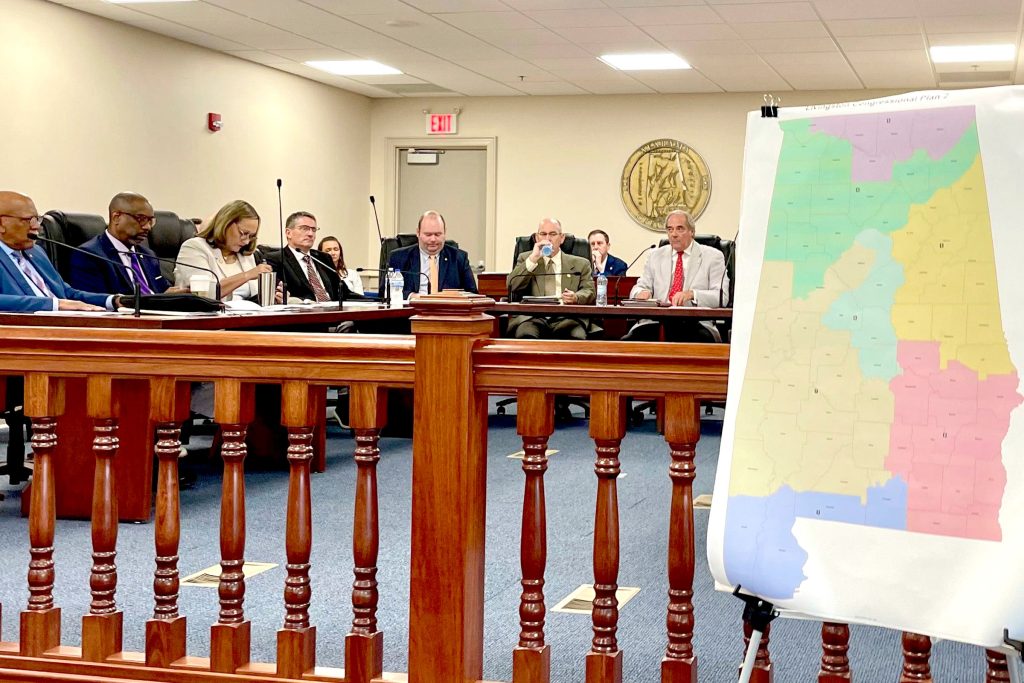
MONTGOMERY, AL — In a sweeping legal victory for voting rights, a federal court ruled on May 8, 2025, that Alabama’s 2023 congressional map “intentionally discriminated” against Black voters. The decision permanently blocks the use of that map and upholds a remedial version that includes two majority-Black districts—a historic first in Alabama’s congressional delegation.
“This is a monumental victory for Black voters in Alabama,” said Deuel Ross, senior counsel at the NAACP Legal Defense Fund. “Our democracy only works when every voice has equal weight.”
Timeline: From Resistance to Representation
The decision caps a four-year legal and political struggle to secure fair representation for Alabama’s Black population—who make up roughly 27% of the state.
• Nov. 2021: The state legislature enacts a map with just one majority-Black district out of seven.
• Jan. 2022: A federal court blocks the map, citing likely violations of Section 2 of the Voting Rights Act.
• June 2023: The U.S. Supreme Court, in Allen v. Milligan, upholds the lower court’s ruling and affirms the need for an additional majority-Black district.
• July 2023: Lawmakers revise the map—but again include only one majority-Black district.
• Sept. 2023: A federal court rejects the revised map and appoints a special master to draw fairer boundaries.
• Oct. 2023: The court-approved map is finalized and used in the 2024 elections, resulting in two Black representatives elected to Congress.
• May 2025: A federal court rules the state acted with intent to discriminate and orders the court-drawn map to remain.
“This ruling wasn’t about politics—it was about fairness,” said plaintiff Evan Milligan. “For decades, Black voters have been robbed of representation. Now, we are finally being heard.”
The court’s opinion expressed frustration with Alabama’s actions:
“We are deeply troubled that the State enacted a map that the State readily admits does not provide the remedy we said federal law requires.”
Legal Showdown: Appeals and Oversight
In June 2025, Alabama Attorney General Steve Marshall filed a third appeal to the U.S. Supreme Court, seeking to overturn the federal court’s ruling and reinstate the legislature’s map. The case may become a defining moment for how far courts—and federal authorities—can go to enforce voting equity.
Simultaneously, plaintiffs are requesting that Alabama be placed back under federal preclearance—a requirement removed in the 2013 Shelby County v. Holder decision. If reinstated, Alabama would have to obtain federal approval before enacting any future changes to voting maps.
A three-judge panel has scheduled a hearing on the matter for July 29.
“Alabama sought to ignore, evade, and strategically frustrate attempts to remedy racial discrimination,” lawyers for the plaintiffs wrote in a court filing, comparing the state’s tactics to those used in the 1960s Civil Rights Era.
DOJ Sparks Debate
In a controversial move, the U.S. Department of Justice (DOJ) filed a Statement of Interest opposing the plaintiffs’ request for preclearance. The DOJ’s position has drawn sharp criticism from civil rights leaders who say federal oversight remains essential.
“This case sets a national precedent,” said Janai Nelson, President of the NAACP Legal Defense Fund. “The days of racial gerrymandering are numbered.”
What Comes Next
If the U.S. Supreme Court agrees to hear Alabama’s appeal, the resulting decision could reshape the future of redistricting law across the nation. Meanwhile, the outcome of the July 29 hearing could determine whether Alabama returns to the kind of federal oversight once seen as critical to protecting Black voters in the South.
For now, the court-approved map—which gave Alabama’s Black voters real power at the ballot box—remains in place. But the fight for electoral justice in Alabama is far from over.