
SPEAKIN’ OUT NEWS
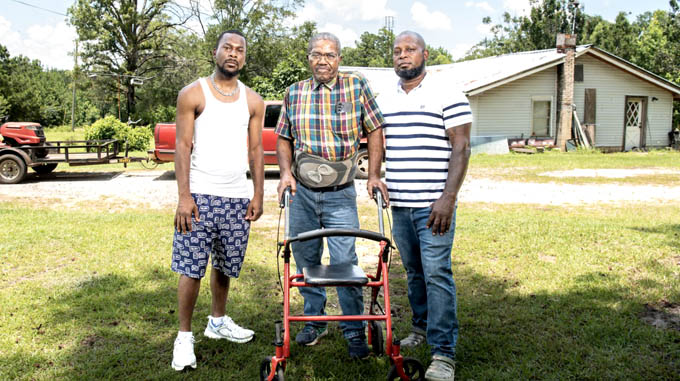
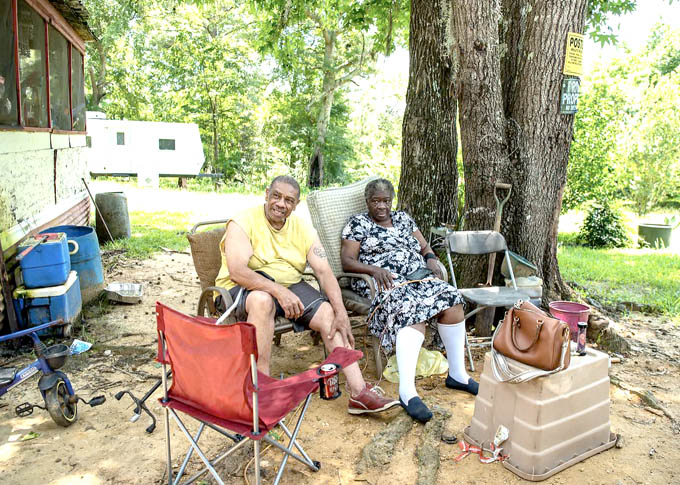
(Photograph: Andi Rice for the Guardian)
LOWNDES COUNTY, Ala. — A historic federal agreement once hailed as a landmark victory for environmental justice has been dismantled—leaving residents of one of the poorest, most historically significant counties in the Deep South to once again face raw sewage, crumbling infrastructure, and a government that many say has turned its back on them.
In April, the U.S. Department of Justice under the Trump administration terminated the 2023 civil rights settlement that had aimed to address long-standing wastewater failures in Lowndes County. The decision was justified under Executive Order 14151, which bans federal programs supporting diversity, equity, and inclusion (DEI), including those related to environmental justice.
“Raw sewage on the ground is not DEI,” said Stephanie Wallace, a community outreach worker with the Center for Rural Enterprise and Environmental Justice. “It’s a sad reflection of past times that people in this day and age are still fighting for such basic rights.”
A Legacy of Injustice
Lowndes County, a rural stretch of Alabama between Selma and Montgomery, is home to just over 9,000 people—nearly three-quarters of whom are Black. It sits in the heart of the Alabama Black Belt, named for its rich soil but long synonymous with racial oppression, from slavery and sharecropping to modern structural neglect.
During the civil rights movement, the county became a ground zero for Black political organizing, led by icons like Stokely Carmichael and groups like SNCC. It earned the nickname “Bloody Lowndes” for the violent backlash to peaceful protests. Today, many of the families living without safe sanitation are descendants of enslaved people and civil rights foot soldiers.
A System Failing the Poor
Generations of residents have lived without working septic systems, a result of poverty, nonabsorbent clay soil, and chronic government neglect. Many rely on straight pipes that discharge waste into their yards. Some, like Willie and Thelma Perryman, were finally on the waitlist to receive custom systems—before the agreement was canceled.
“We thought help was finally coming,” said Thelma. “Now it feels like we’ve been pushed back again.”
The Lowndes County Unincorporated Wastewater Program (LCUWP), created to oversee repairs, has installed only three systems due to extreme costs, engineering challenges, and red tape. Another 20 are queued for summer, but hundreds more are waiting.
Emergency Funds Are Running Out
Initial progress was made possible by a $5 million federal allocation from the American Rescue Plan Act (ARPA) in 2023, of which $1.5 million was directed specifically to Lowndes County. Those emergency pandemic relief funds have allowed for assessments and a small number of installations. However, once that money is gone, so is the help.
The Alabama Department of Public Health (ADPH) has stated that its role will shift to technical assistance only once ARPA funds are exhausted. No additional financial support for septic installations is planned. Hundreds of qualified households—many of them elderly or living with chronic illness—will likely remain without safe sanitation unless new funding is secured.
“We’re racing against the clock,” said Carmelita Arnold, director of the LCUWP. “When the money runs out, so does the help—unless someone steps up.”
Lives in the Balance
Clara Hope, a retired widow living on a fixed income, has waited decades for relief. Her home is tidy, but a faint odor hangs in the air—raw sewage fertilizes the grass behind her house. “I just felt everything was defeated when Trump canceled the program,” she said. “I’m one of the lucky ones, but what about the others?”
Christopher McPherson, a handyman whose family has lived on 33 acres without proper sanitation for generations, is also in limbo. “It’s wild that people don’t think about the poverty side of America,” he said. “We’re just trying to live with dignity.”
A Political Divide, a Human Crisis
Trump won Alabama by a wide margin in 2024, but 68% of Lowndes County voters supported Kamala Harris. Trump’s recent federal budget cuts deeply into Medicaid and SNAP, affecting rural Black Belt communities already struggling with basic services. In Lowndes, where the median income is just $35,000—57% below the national average—the cost of a functioning septic system can exceed $50,000.
“Trump is going to be a dictator—that’s always been his goal,” said Elis Bandy, LCUWP vice president and a longtime pastor. “But as Dr. King said, we still gotta fight for our rights.”
What Comes Next?
Despite assurances from state officials, advocates fear that sanitation law enforcement may return, threatening the poor with fines or jail time. Local leaders and nonprofits are now scrambling to secure new funding sources to avoid losing more progress.
In a county where civil rights history runs deep, the right to flush a toilet without fear remains unfinished business. What was once a hopeful step toward equity now stands as a stark reminder of how easily progress can be undone.