

Submitted by William Smothers, SON, Publisher, and Editor in Chief
INTRODUCTION
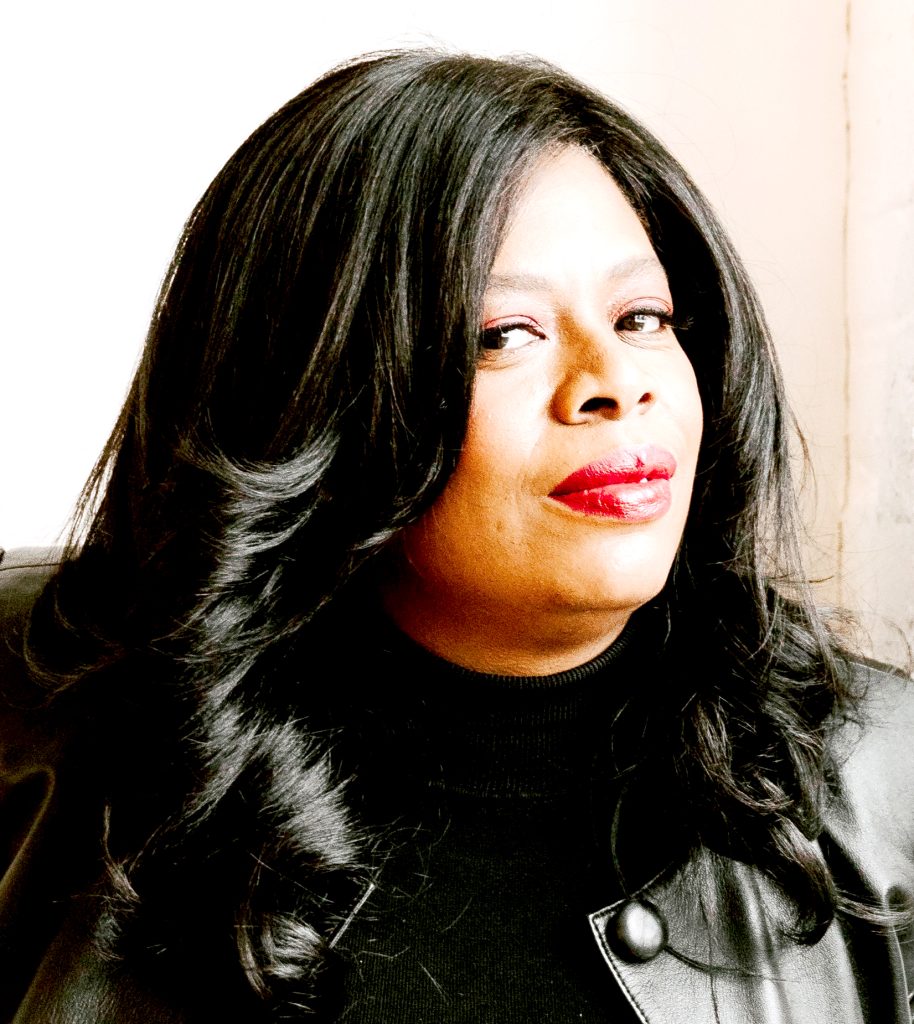
Dr. Quintaniay Holifield is a Huntsville native, who has been employed by the federal government for over 30 years.
She attended the former J. O. Johnson High School and completed her undergraduate studies at Alabama A&M University, graduating Magna Cum Laude with a B.S. degree in zoology and a minor in Chemistry. She received her PhD from State University of New York, College of Environmental Science and Forestry (Syracuse, NY) in 2003. Her first federal job opportunity was in Darmstadt, West Germany, where she was employed as a clerk typist for the Department of Defense 32nd Army Air and Missile Defense Command (32nd ADDCOM) while attending Frankfurt American High School in Frankfurt, Germany. Dr. Holifield spent thirty years being employed as a research soil scientist with the USDA Forest Service. She is currently the National Program Manager for Urban and Community Forestry, with the USDA Forest Service. Her current duties include working with state partners and community tree groups, making investments from the ground up in communities and improving more than 140 million acres of urban and community forest across the United States and Territories.
.
CHILDHOOD
SON: What words would you use to describe yourself as a child?
Dr. Holifield: Curious, Observant, and Introspective
SON: When did you come into your own?
Dr. Holifield: To be perfectly honest, I would say I was about five years old and in the first grade. I did not know it at the time, but my teacher was dyslexic, and she consistently wrote the letter “J” backwards while writing on the chalkboard. I told her after class, out of respect, or course that she was writing her “J’s” incorrectly. The teachers scolded me and told me that I didn’t know what I was talking about. I returned home and informed my parents of what occurred that day. My parents spoke with the school principal and asked the teacher and asked her to explain herself. After the discussion, I was removed from that classroom and put into another classroom. Little did I know that this would be the reoccurring pattern in my primary and secondary educational journey, but that was the first experience where I exercised my voice, being my own advocate and had the confidence to do so.
SON: What was the worst rule to break in your family?
Dr. Holifield: Being disrespectful.
SON: What was the most important lesson your father taught you?
Dr. Holifield: My father taught my brother and I to be individuals of integrity. Do not comprise your integrity, which can devalue your self-worth and your confidence. And to balance this lesson, my mother taught my brother and I to be kind and to be honest but should also taught us not to let people mistake your kind- ness and empathy as a sign of weakness. From both of our parents by brother and I also learned that you must be able to speak up for yourself and defend others when facing injustice, but also acknowledge there will be a sacrifice for those actions that take courage.
CAREER
SON: When and why did you decide on this career path?
Dr. Holifield: As a child, I was curious about how the natural world really worked. My grandfather was a farmer and he exposed me to the wonderful world of soil, at an early age. Having ambitions of being an architect, or lawyer or a medical doctor, after doing a book report on Benjamin Banneker, the first African American man of science, that is when I realized that I wanted to pursue science as a career.
In addition to being a soil scientist with three decades of experience, it led me to being an advocate for sustainable practices when gathering food from the land or the sea and bringing it to the table. I have co-author of a guide to urban farming distributed by the USDA and actively promotes sustainable food choices through the recipe selections on my blog. Often cooking with the vegetables that I grow in my own back yard, I am inspired by the Southern dishes cooked by my grandmothers, mother, a host of family members and the global cuisines of Africa, Europe, South America, and Asia. My scientific training has lent an air of precision to my cooking style as I experiment with the melding of culinary history with classic food preparations that lead me to publishing, “A Culinary History of the Chesapeake Bay: Four Centuries of Food and Recipes” (2021), available on-line at Amazon.com, The History Press and at a local bookstore such as Books-A- Million and Barnes & Noble.
SON: Describe a typical day in your business?
Dr. Holifield: A typical workday for me, as a National Program Manager for the Urban and Community Forestry Program, starts at about 5:30 AM.I am a part of a 12 member Washington, DC Office staff that oversees the technical, fi- nancial, and educational assistance program, delivering nature-based solutions to ensure a resilient and equitable tree canopy in urban areas, where more than 84% of Americans live.
For a little more back- ground, the Urban and Community Forestry is a covered program under the USDA Justice40 Initiative established through Biden-Harris Administration Executive Order 13985. To advance the mission of Justice40, the Urban and Community Forestry Program delivers 40% of the program’s investments through established and new partnerships working to support disadvantaged communities experiencing low tree canopy and environmental justice issues. The Urban and Community Forestry Program, which has historically been funded at $36 Million dollars, was awarded $1.5 Billion dollars through the Inflation Reduction Act of 2022 (IRA). The IRA investment significantly increases lo- cal impact and improves the quality of life for those in the most need of relief from extreme heart, severe flooding, and air pollution.
No two days are alike in the Washington Office, which is a fast-paced environment. For the last 18 months, the Washington Office Staff has been consistently working on delivering the IRA Investment, where meetings, briefings, and taking information requests from Congressional Staffers happen on a daily basis. My job requires me to establish new partnerships and maintain existing partnerships working to support disadvantaged communities experiencing low tree canopy
and environmental justice issues. My day usually ends at about 6:00 PM.
MOTHER/FATHER
SON: Are you married and how many children do you have?
Dr. Holifield: No.
SON: What do you want your kids and grandkids to learn from you?
Dr. Holifield: I do not have any children of my own, but I do have an ephewanda whole host of children who are my god children and adopted “nieces and nephews”. I try to live my life, like the example my parents and the village of Huntsville provided for me, and that is to be a person of good character, to have empathy, to be kind; and most importantly, to learn how to pivot when life gives you lemons. Life is by no means perfect and becoming and being an adult is hard. Pivoting is a way of utilizing problem solving skills that will help you adjust and manage your expectations. Pivoting also teaches you patience.
THE FUTURE
SON: What are your feelings about growing older?
Dr. Holifield: To be perfectly honest, I am enjoying growing older when it comes to the experiences and the knowledge that I have gained thus far. However, aging is not for the weak. The body changes. As one grows older, one must maintain their health and keep moving the body, keep exercising the mind through reading, traveling, and learning something new. I believe it is a bless- ing to grow older and to live as long as you can to bless others. Growing older is a privilege that everyone does not have the grace to experi- ence.
SON: Have you become the person you expected you would be?
Dr. Holifield: With great humility and gratitude to my parents, my faith, my extended family, my friends and yes, even the sport of football, I can answer with all honesty, “yes”, that I am the person I expected to be.
SON: What are you most proud of?
Dr. Holifield: My family and my friends. Their accomplishments make me proud.
SON: Do you think you will ever slow down? Stop working?
Dr. Holifield: No because I am a workaholic. I absolutely love my current position. When I think about it, it only took me 41 years to get my dream job. I would say that patience, perseverance, and the ability to pivot helped me get to where I am today. Will I ever stop working? I may retire from the job one day, but I will continue to work in assisting others in achieving their goals, whether I start an environmental or educational consulting firm or volunteer my services in helping the people in the community.
SON: What are some challenges you face in business?
Dr. Holifield: The challenges that I have faced in my career have, been that most people are intimidated by an African American female who is confident, intelligent, and who can be in authority or in charge in any given profession. Too many times, I have walked into a meeting, where I was on the only woman, the only person of color and it was assumed I was the secretary, only present to take notes and get coffee for the staff.
SON: How may you be contacted?
Dr. Holifield: For more information, please visit the public website for the USDA Forest Service Urban and Community Forestry Program at: https://www. fs.usda.gov/managing-land/ urban-forests/ucf