
By Savannah Tryens-Fernandes
Parents throughout Alabama are reporting issues getting promised food money aid.
Pandemic EBT (P-EBT) payments for eligible children who didn’t receive school lunches because of virtual or hybrid learning began rolling out the week of June 7 for meals missed in the August-December 2020 semester. But many parents have faced difficulties in either getting their P-EBT cards in the mail or getting the correct amount.
Hundreds of people have posted in the Facebook group Alabama Benefits who say they received incorrect amounts, did not receive cards at all or who are asking questions about how the process should unfold.
“More attention should have been paid to this process and our kids should have been valued more,” said Sharie Jackson, whose two daughters attend Bessemer City High School. “People say it’s free money, but at the end of the day it’s money we need to feed these children.”
Students who receive free and reduced-price meals or whose schools participate in the Community Eligibility Provision (CEP) are eligible for P-EBT, as well as children under the age of 6 who are enrolled in SNAP. The program, which is funded by the U.S. Department of Agriculture and administered by the Alabama Department of Human Resources with assistance from the state Department of Education, provides each child with $6.82 a day for every day not in the classroom. Benefits are calculated on a monthly basis — students who were entirely virtual should receive P-EBT cards in the mail with a total of $615 for the fall term, while fully hybrid students should receive a total of $367.
While there is a DHR hotline for parents with questions and complaints about P-EBT, many Facebook posts report long wait times and difficulty getting through. The hotline receives an average of 3,500 calls a day, according to DHR.
Jackson opted for her children to learn virtually because of health conditions that made her more likely to get severely ill from COVID-19. But when her P-EBT cards came in the mail on June 21 and 23, she immediately realized both daughters only received the lower, hybrid amount.
Jackson said she called the DHR hotline more than 11 times and never got through. On the twelfth try, she was placed on hold for over 30 minutes until someone finally took down her information, telling her they’d call back with answers in “three to five days.” When that time came and went, she called back and was told staff didn’t have any information for her.
It is unclear whether errors are resulting from the USDA’s CEP designations, the department’s allocations, individual schools’ record-keeping, or some mixture of the three.
Bessemer City is a CEP district, meaning schools serve free breakfasts and lunches to all enrolled students and all students automatically qualify for P-EBT. The district has provided an average of 6,000 meals a day since the onset of the pandemic for pickup at schools and at over 20 additional community sites, according to its child nutrition program.
Although parents statewide have the option to pick up meals from schools, many still encounter obstacles and P-EBT helps cover a needed gap.
“Here in Alabama, we have many rural areas that do not have that kind of access to resources,” said Celida Soto Garcia, hunger advocacy coordinator at Alabama Arise. “We also have to consider families that live in communities with extremely short-circuited public transportation, as well as parents who are disabled, and caregivers who are elderly.”
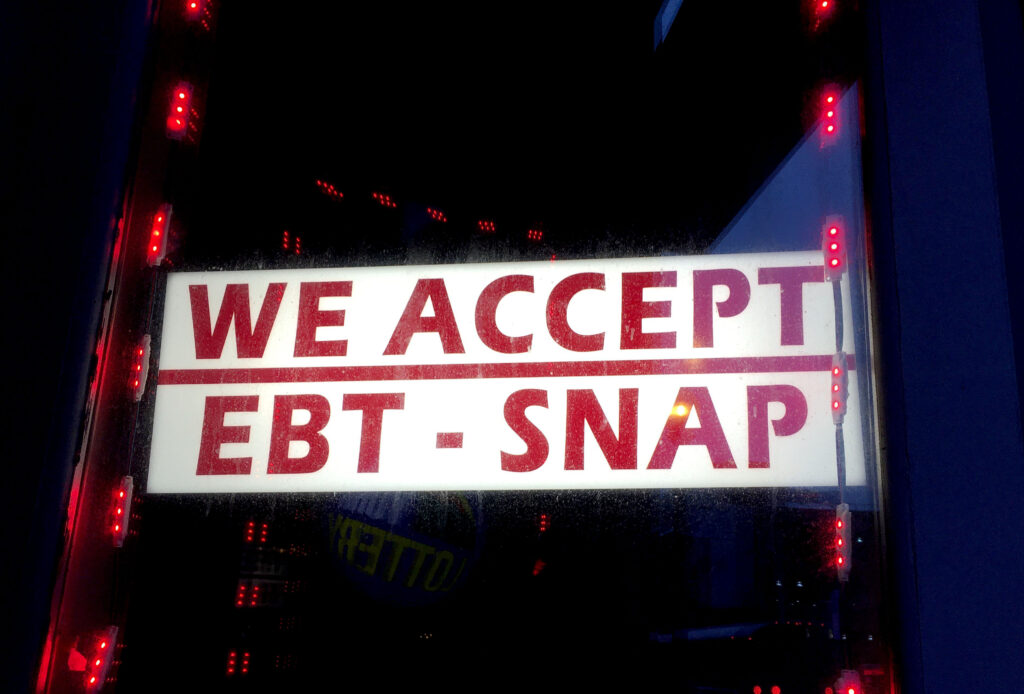
P-EBT allows families to buy food at any store that takes SNAP, which can be convenient for parents who live closer to their local grocery store than their child’s school, or for working parents who aren’t able to pick up food during the time slots provided by the school.
According to the departments tasked with administering P-EBT in the state, many of the reported errors occurred because schools did not correctly input whether a child was virtual or hybrid, or because parents failed to update their address by the March 31st deadline.
“Everyone is going above and beyond to try to make sure their kids get fed, despite the hiccups,” said Michael Sibley, director of communications at the department of education. “We are trying to get this money out to children as quickly as we can and as much as we can.”
Parents say they want to know how officials plan to address errors.
“I want them to at least release information saying they’re aware that there is an issue and they’re working hard to fix it,” Jackson said.
The Department of Human Resources says parents with issues should read the news releases posted to their website for information or call the P-EBT customer service hotline at 1-800-410-5827. The department expects that all school-age children should receive their P-EBT cards by July 15, and children under 6 will have benefits loaded to their existing EBT cards sometime in July. If a card was mailed to a previous address, parents can call the P-EBT hotline to provide a current address and DHR will issue a new one.
Parents who received incorrect amounts can expect the correct amounts to be paid by the end of July or early August, if they make DHR aware of the issue by calling the hotline, officials said.
The next phase of P-EBT payments, which will cover January-May 2021, will begin being distributed at the end of July. The first round of P-EBT for the 2019-2020 school year provided over $144 million in benefits to more than 460,000 children. This round is estimated to provide over $170 million to approximately 470,000 children, according to state officials.