
This is an opinion column.
We will elect a female President—just not this year. Nikki Haley is crawling home to South Carolina which once elected her governor and the state that will soon be the final resting place for her presidential bid.
Haley has about a month until South Carolina, in all likelihood, solidifies Donald Trump as the last Republican standing after the party’s ugly dodgeball primary season. A season that lasted just about as long as last week’s sub-freezing temps.
Haley, the daughter of Indian immigrants, got bounced in New Hampshire on Tuesday—losing decidedly to Trump in a one-on-one encounter that was likely her best shot at viability. It was just days before a pertinent historical anniversary.
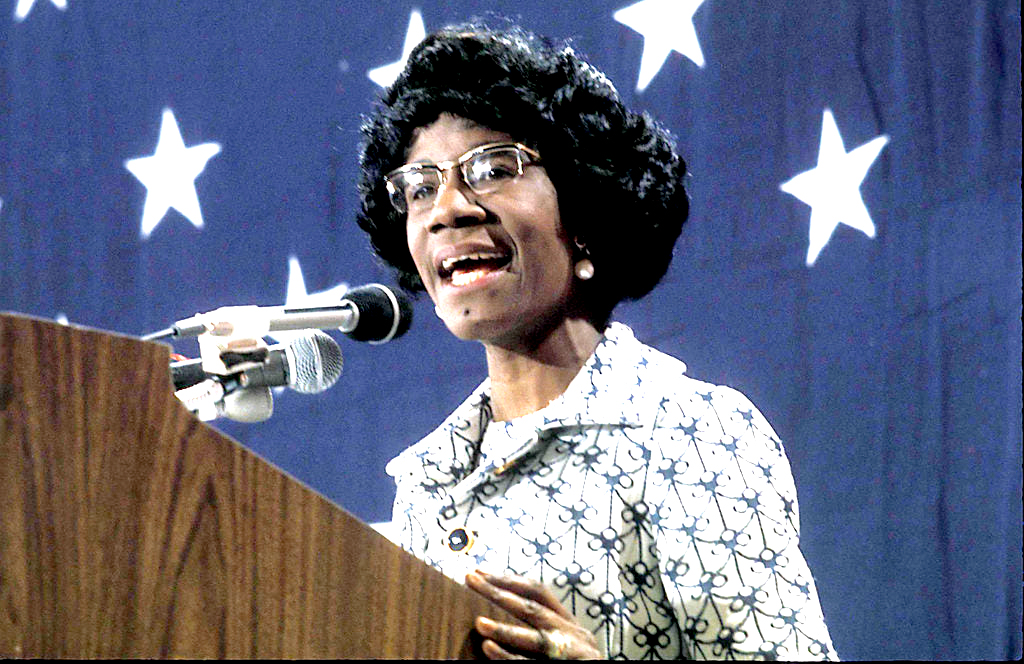
On this date, on January 25, 1972, New York Congresswoman Rep. Shirley Chisholm, the daughter of a Guyanese American father and a Barbadian American mother, stood before a raucous crowd in Brooklyn, N.Y., the city of her birth, and announced her monumental candidacy for President of the United States.
As the first African American to run for president within one of the two major parties, Chisholm was the seed that bore fruit 36 years later when Barack Obama was elected as the first Black President.
As the first female Democrat to seek the party’s nomination, she laid the path where Hillary Clinton tread in 2020 as the party’s first female presidential nominee. (In 1964, Maine Sen. Margaret Chase Smith, a Republican, became the first female nominated for president by a major party; she earned 27 delegates and received 227,007 votes during the primary season.)
I was a high-school sophomore on the day Chisholm launched her bid and can’t say I then appropriately appreciated the magnitude of it. Which is why Chisholm’s journey, against a field of white men, must be included in any curriculum chronicling the progress of African Americans and women in our nation.
In researching this column, I was struck to learn of Chisholm’s surprising relationship with fellow Democratic hopeful George Wallace—Alabama’s segregation-now-and-forever governor.
She emphatically denounced his racist views, though reportedly Chisholm rarely—if ever—mentioned Wallace’s name. Years later, she shared: “George Wallace for some strange unknown reason, he liked me. [He] came down to Florida and he went all over Florida, and he said to the people, ‘If you all can’t vote for me, don’t vote for those oval-headed lizards. Vote for Shirley Chisholm!’”
The endorsement “killed” her chances in the Florida primary, Chisholm added, “because voters “thought that I was in league with him to get votes.”
Wallace’s bid, as you likely know, ended that May when he was shot five times by a would-be assassin, leaving him a paraplegic. According to biographer Anastasia C. Curwood, a history professor and author of Shirley Chisholm: Champion of Black Feminism Power Politics, the Congresswoman visited Wallace in the hospital, which also did not endear her to some supporters.
Chisholm ran for president hoping to galvanize a coalition and garner enough delegates to influence the party’s platform on rights for women and people of color. It didn’t quite happen. She finished the primaries in fourth (152 delegates), ahead of Sens. Hubert Humphrey and Ed Muskie. Sen. George McGovern entered the convention with such a commanding lead (1,729 delegates), he didn’t need to negotiate with anyone.
Of course, McGovern got body-slammed by Richard Nixon in the general election. And the rest…
America will elect a female President someday. When that day comes, she should save two seats at the inauguration for Chisholm and Chase.